Water Conservation Engineering
Environmental Education Curriculum Project
Collaborators: Rachel Silverman, Mira Webber
Fall 2025
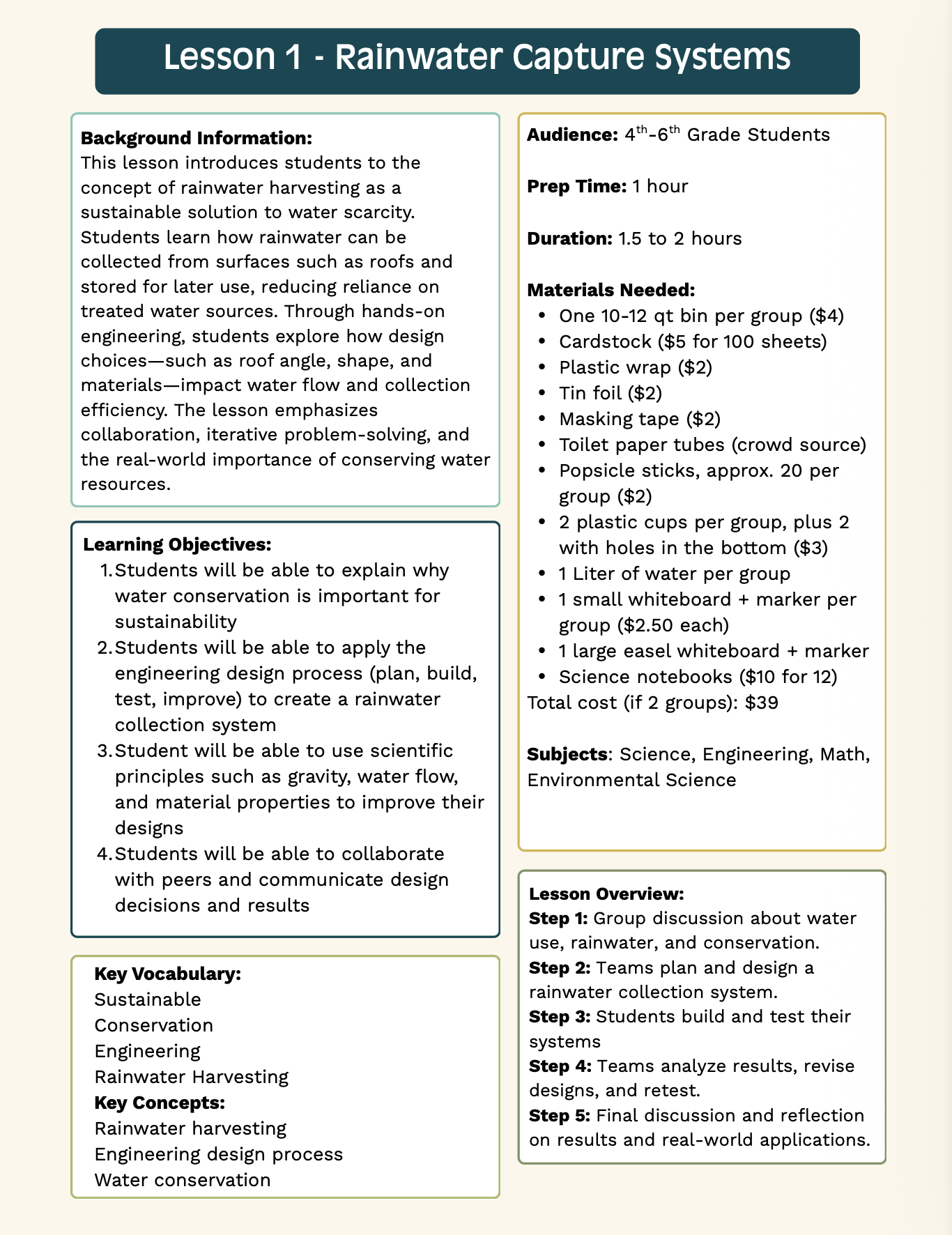
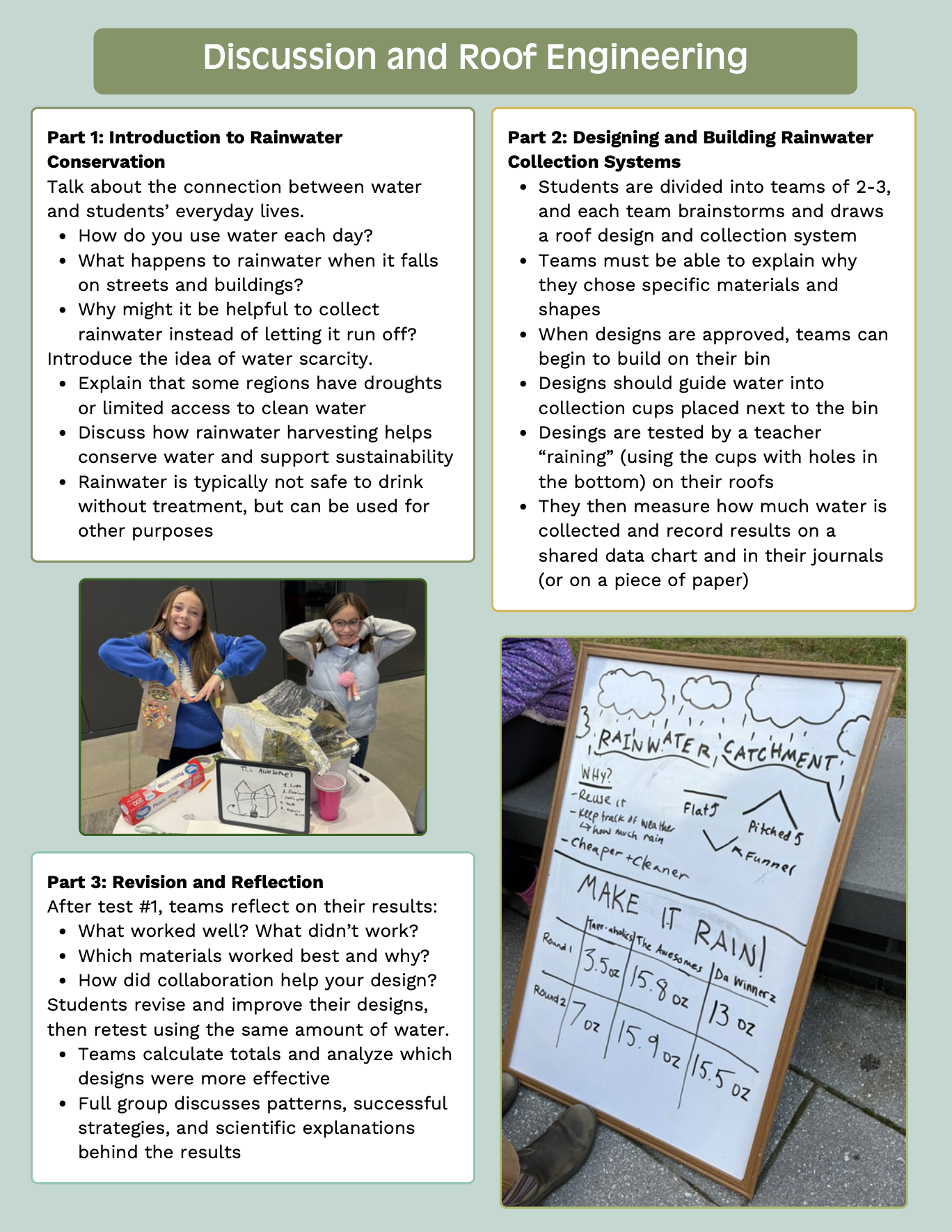
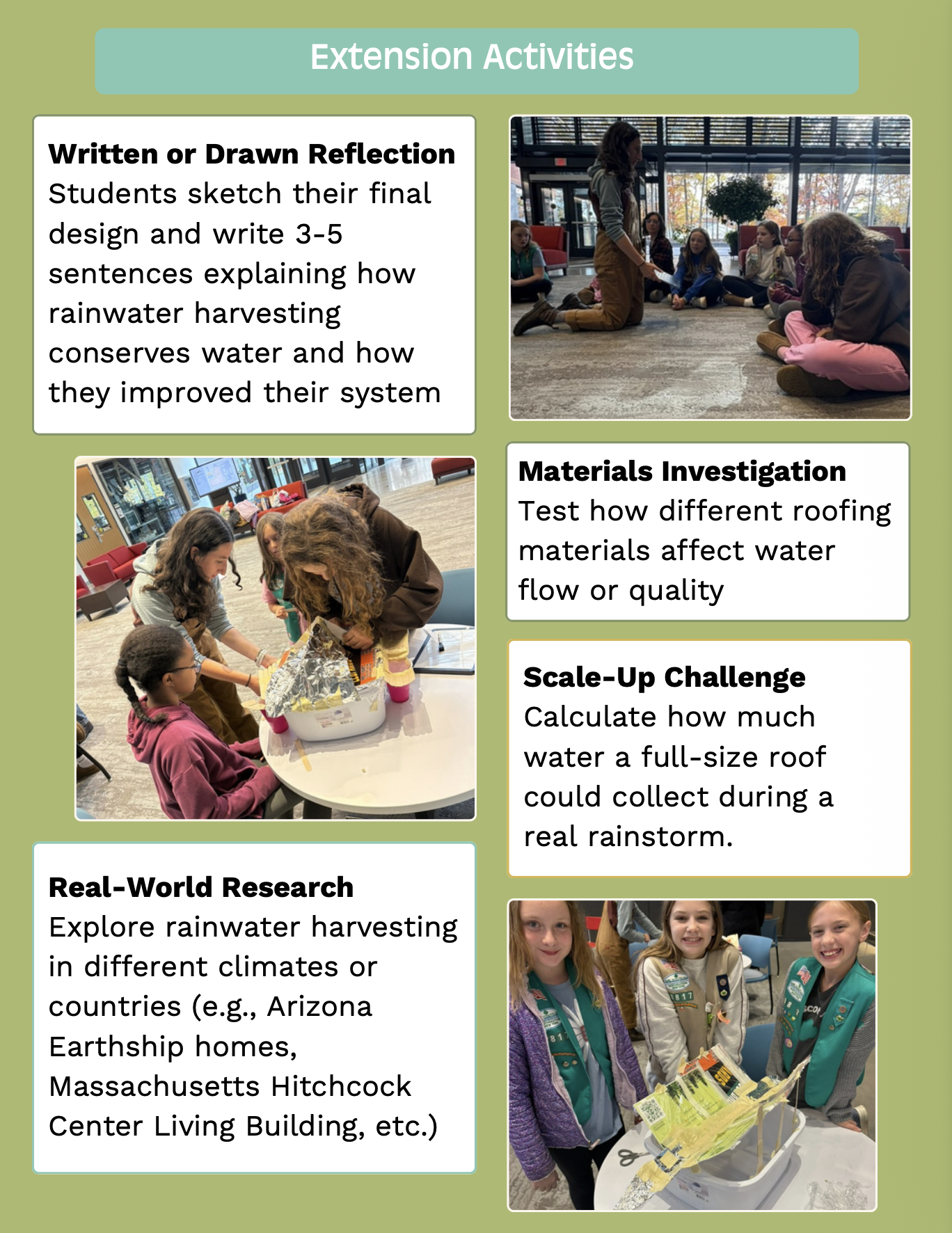
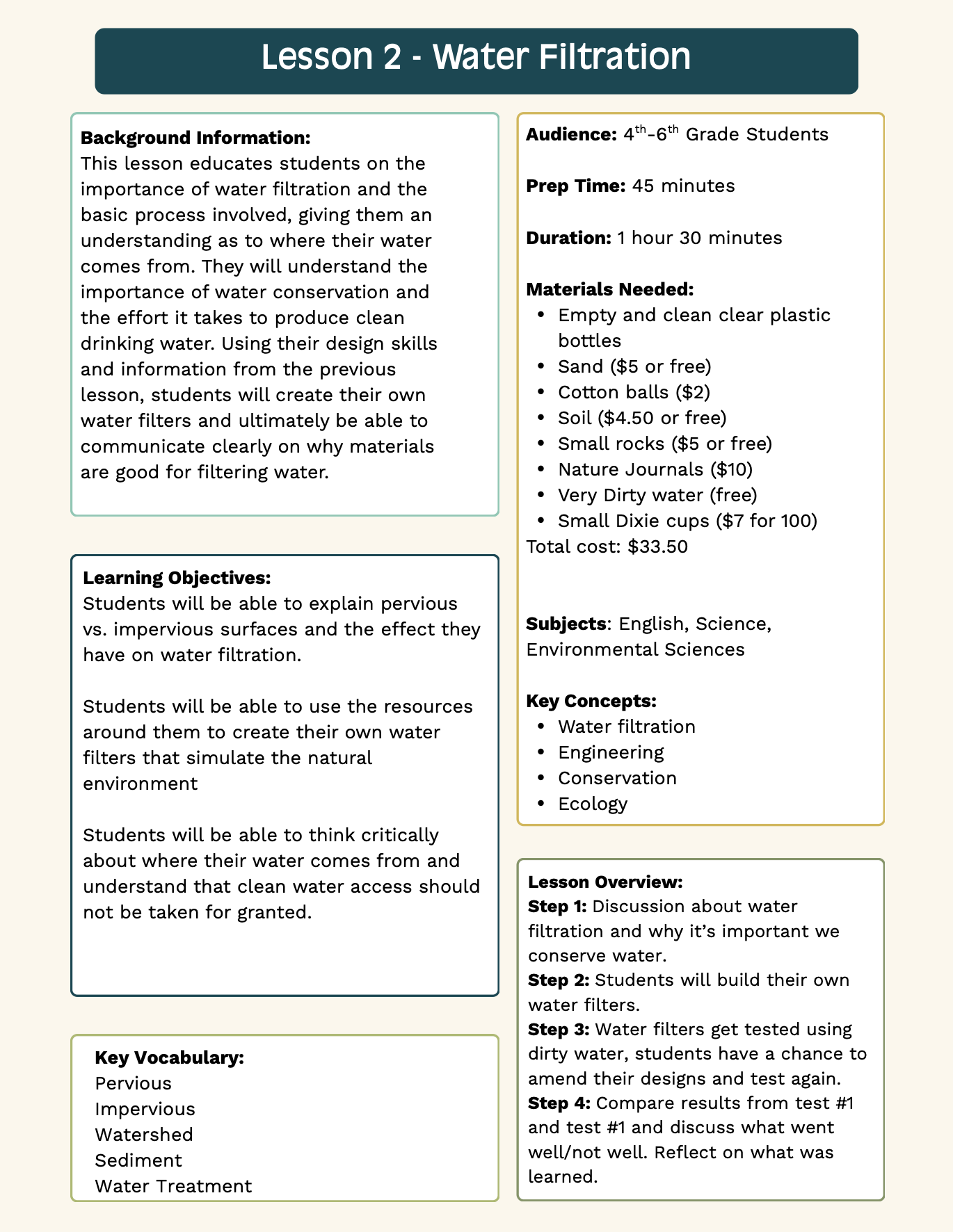
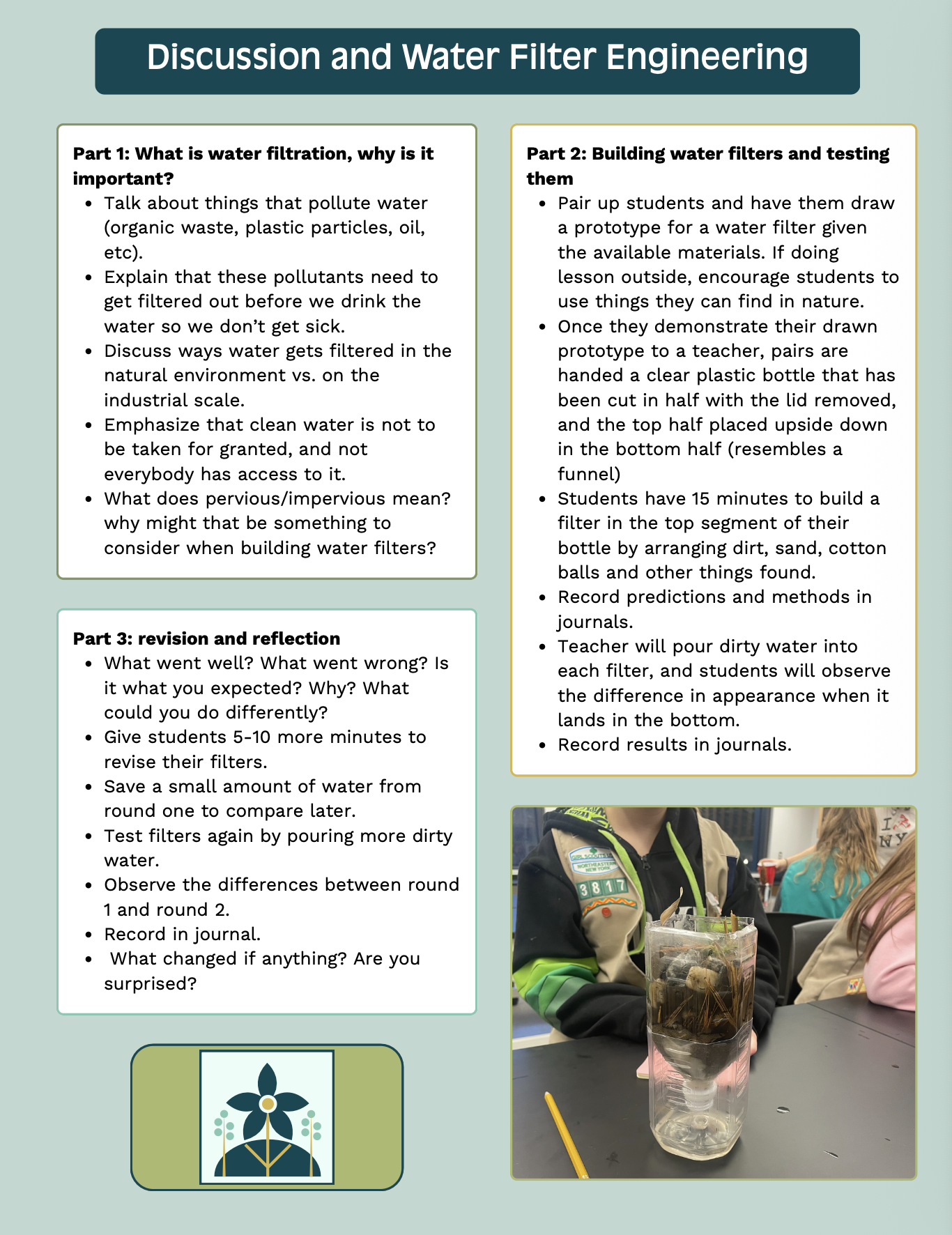
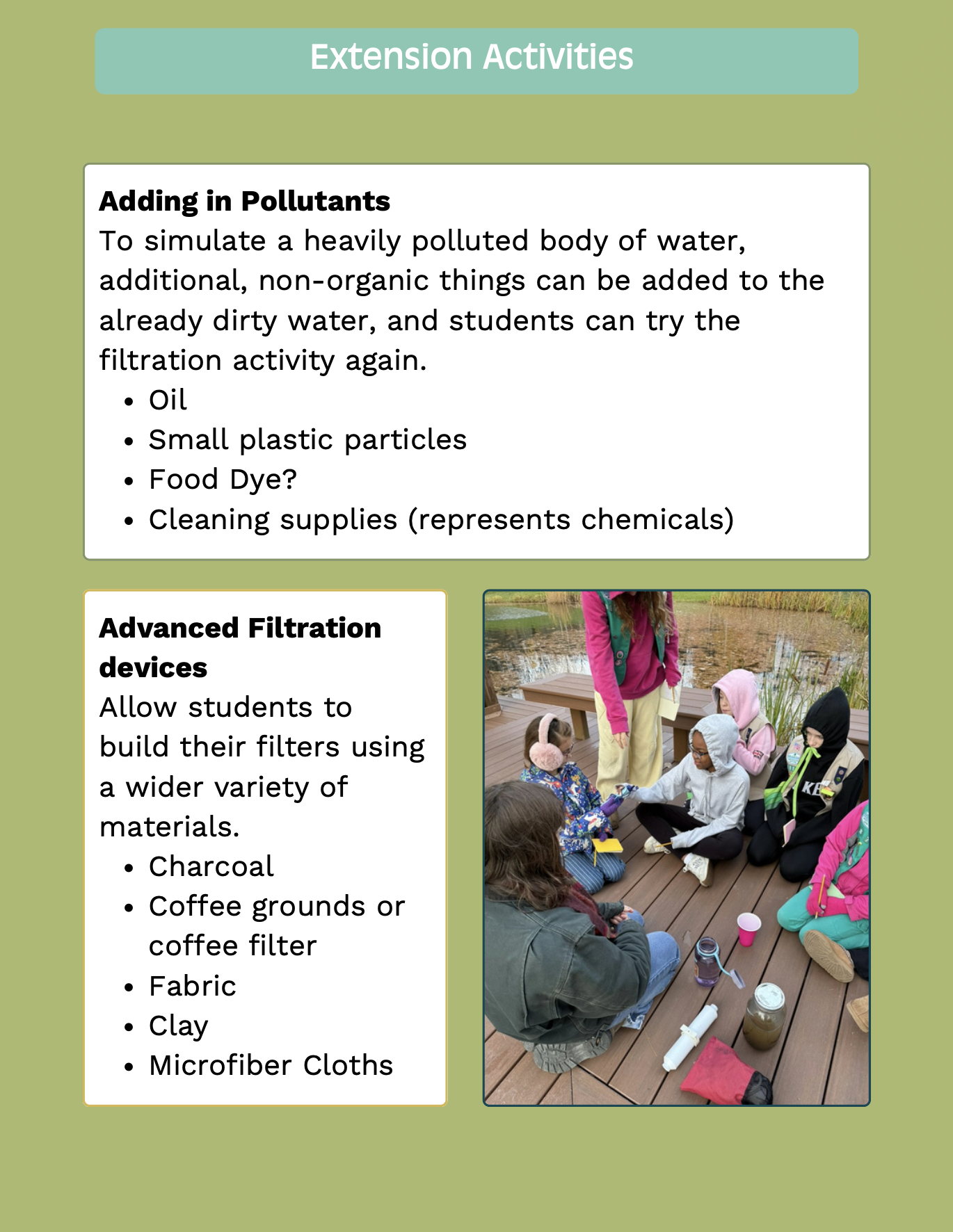
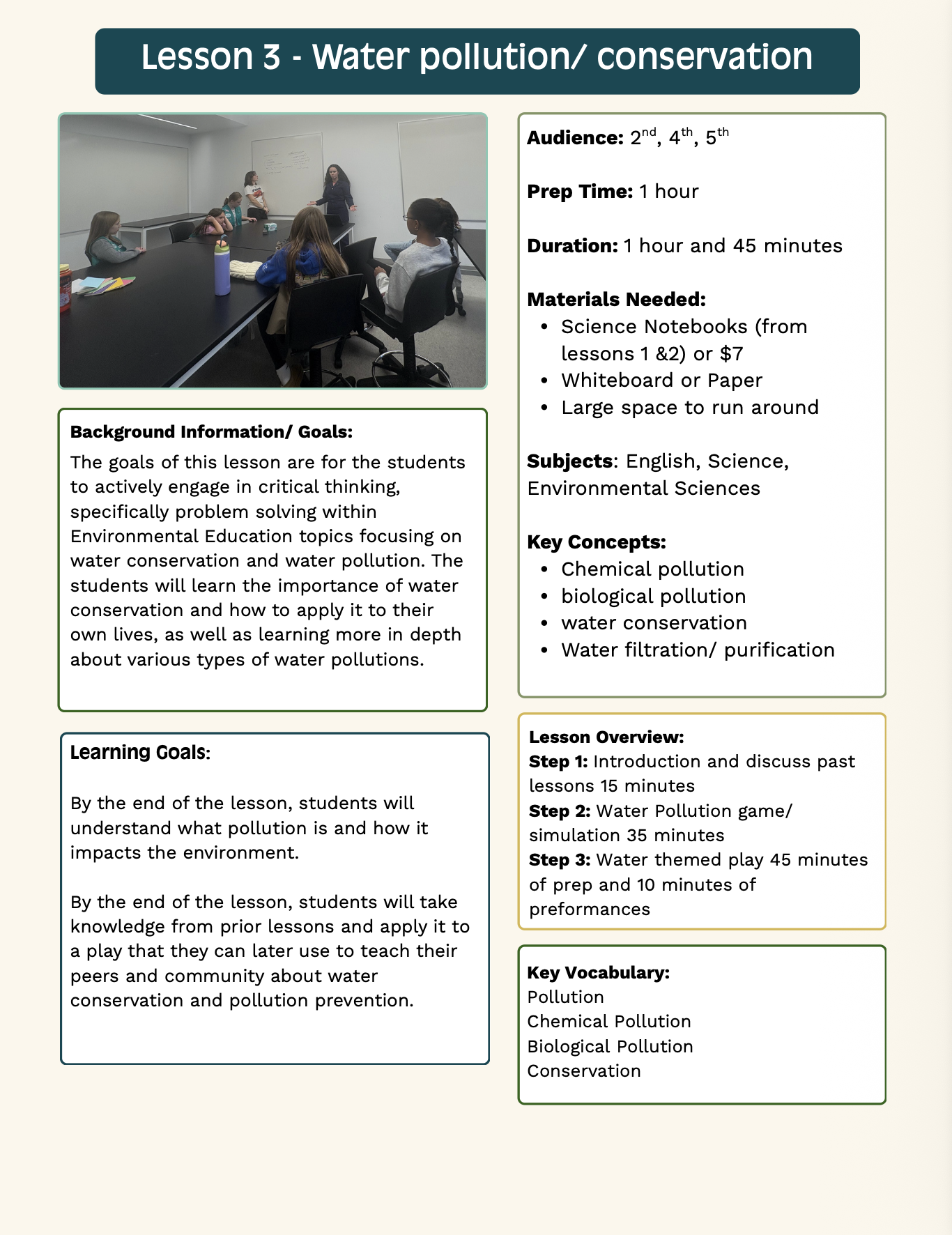
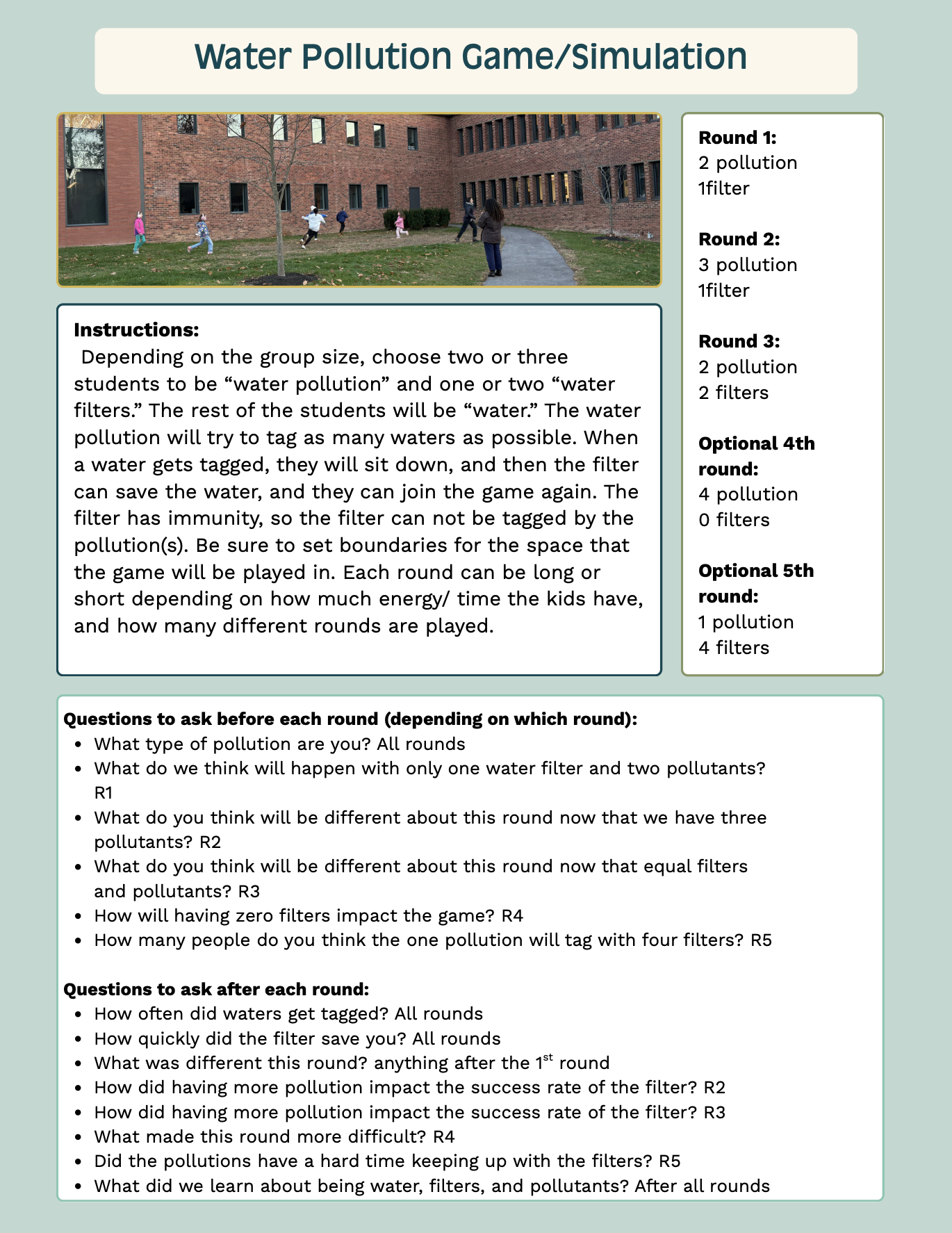
This project, developed for my Environmental Education course, centers on teaching water conservation through hands-on, engineering-based learning. Working collaboratively, my group designed a three-part curriculum for elementary and middle school students that integrates environmental science with creativity, problem-solving, and active participation. The lessons address rainwater capture systems, water filtration, and water pollution, giving students concrete ways to engage with complex sustainability concepts.
Grounded in inquiry-based and experiential learning, the curriculum prioritizes exploration and reflection over traditional lecture-based instruction. Students are encouraged to build, test, revise, and analyze their designs, mirroring real-world environmental problem solving and emphasizing process as much as outcome.
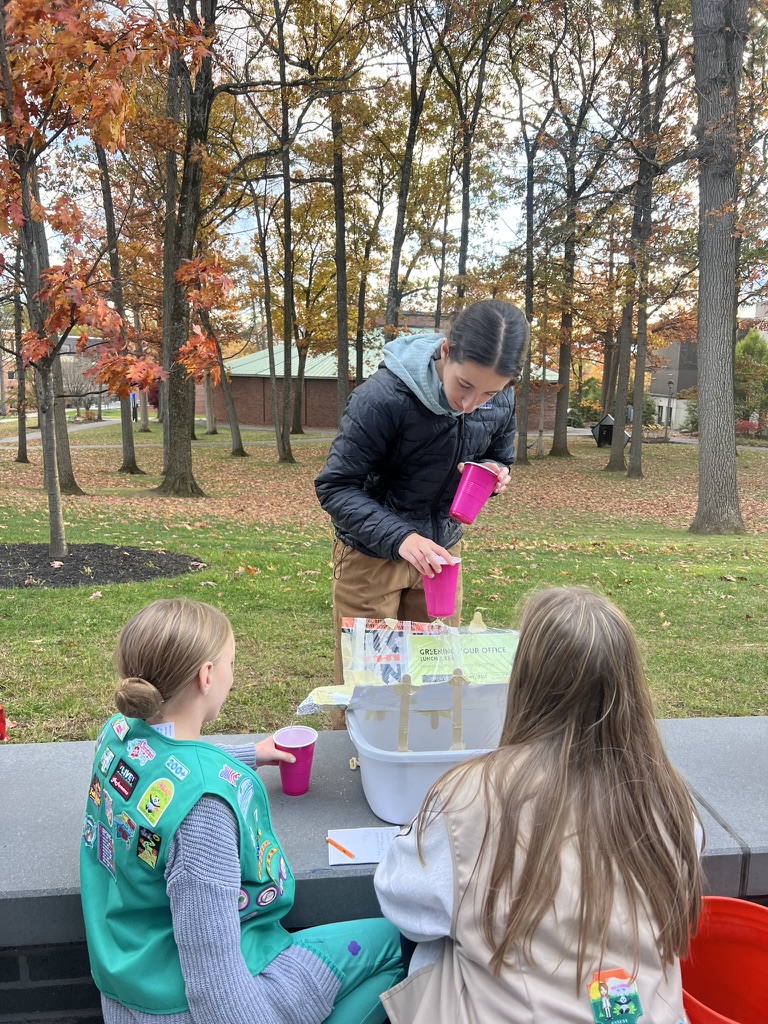
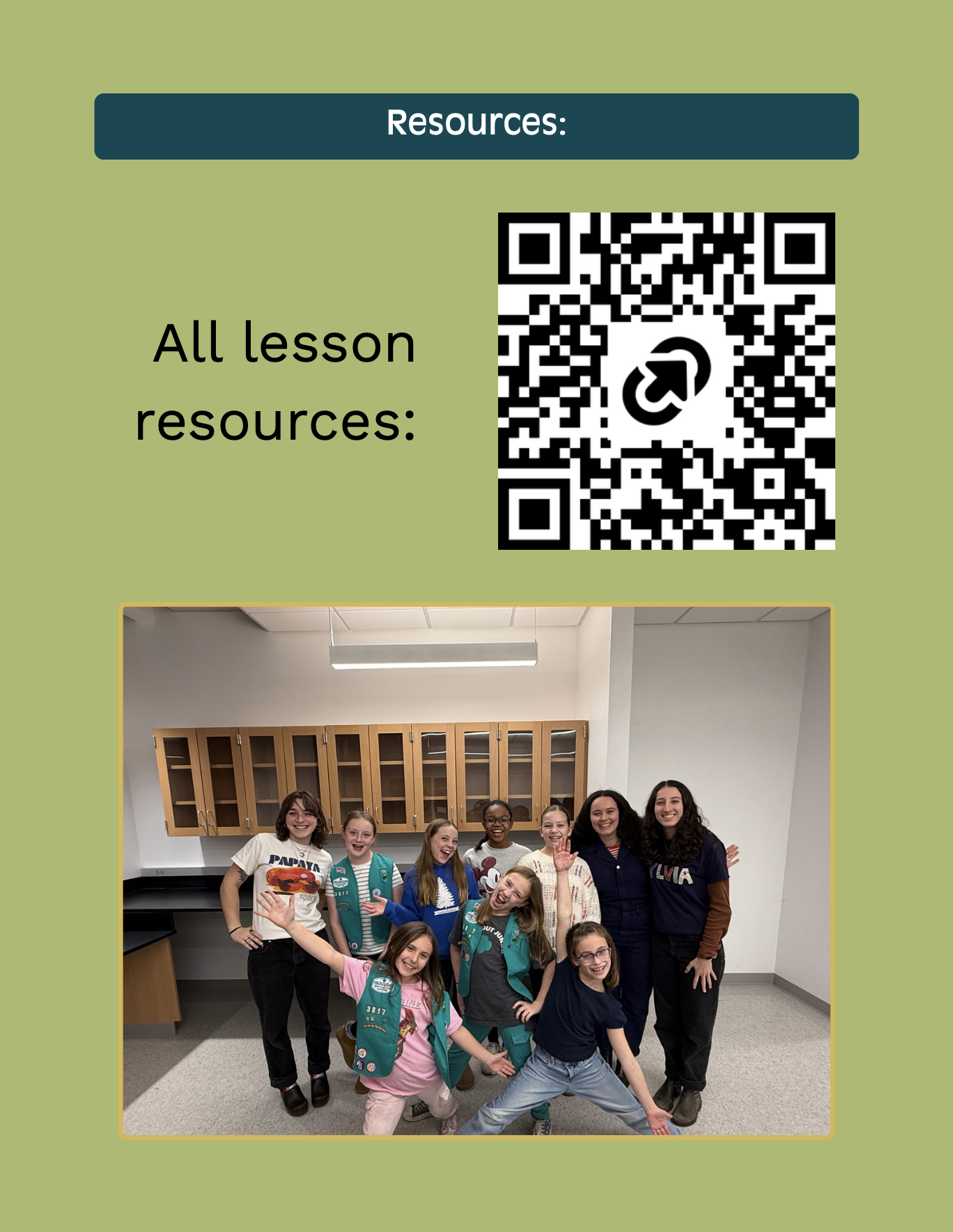
To implement the curriculum, we partnered with a local Girl Scout troop. This collaboration involved early planning with the troop leader, a pivot from an initial focus on paper recycling, and the adaptation of lessons to align with the Journey: Think Like a Citizen Scientist badge requirements. Teaching the lessons in a real-world setting required flexibility, responsiveness, and attention to student engagement.
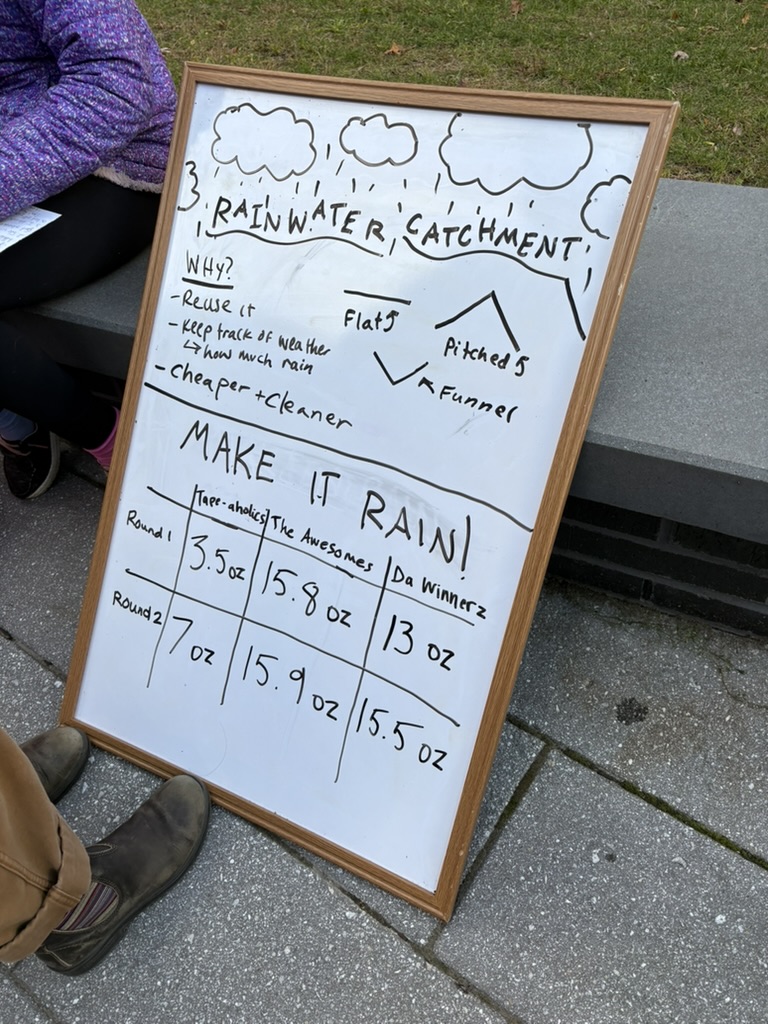
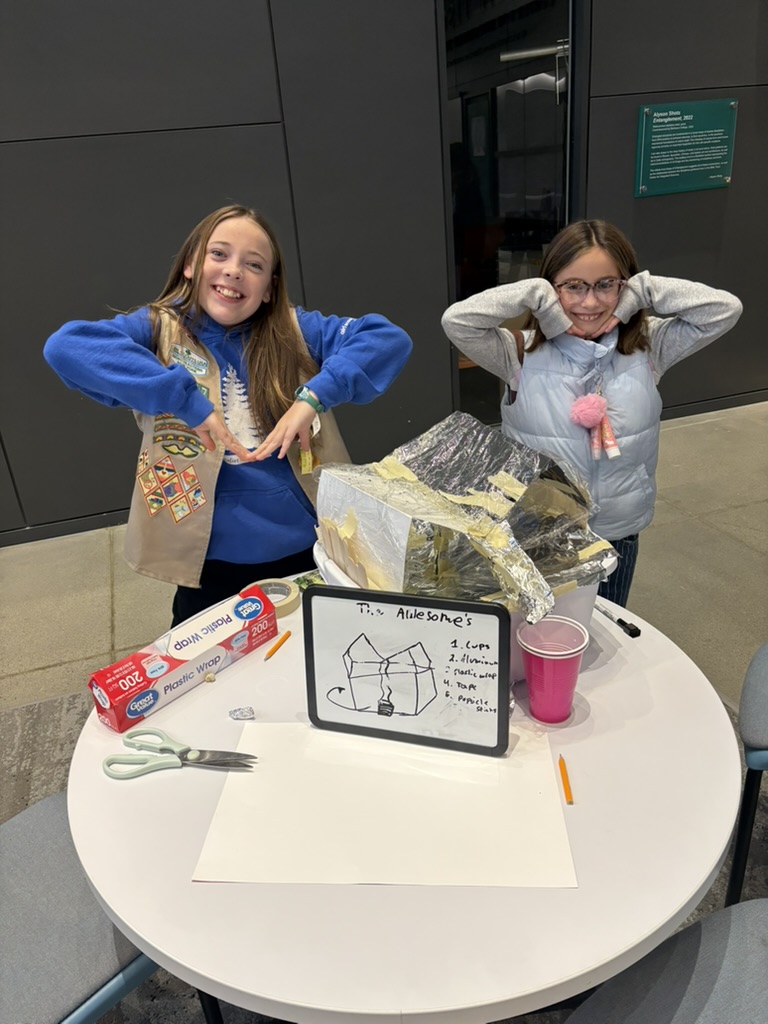
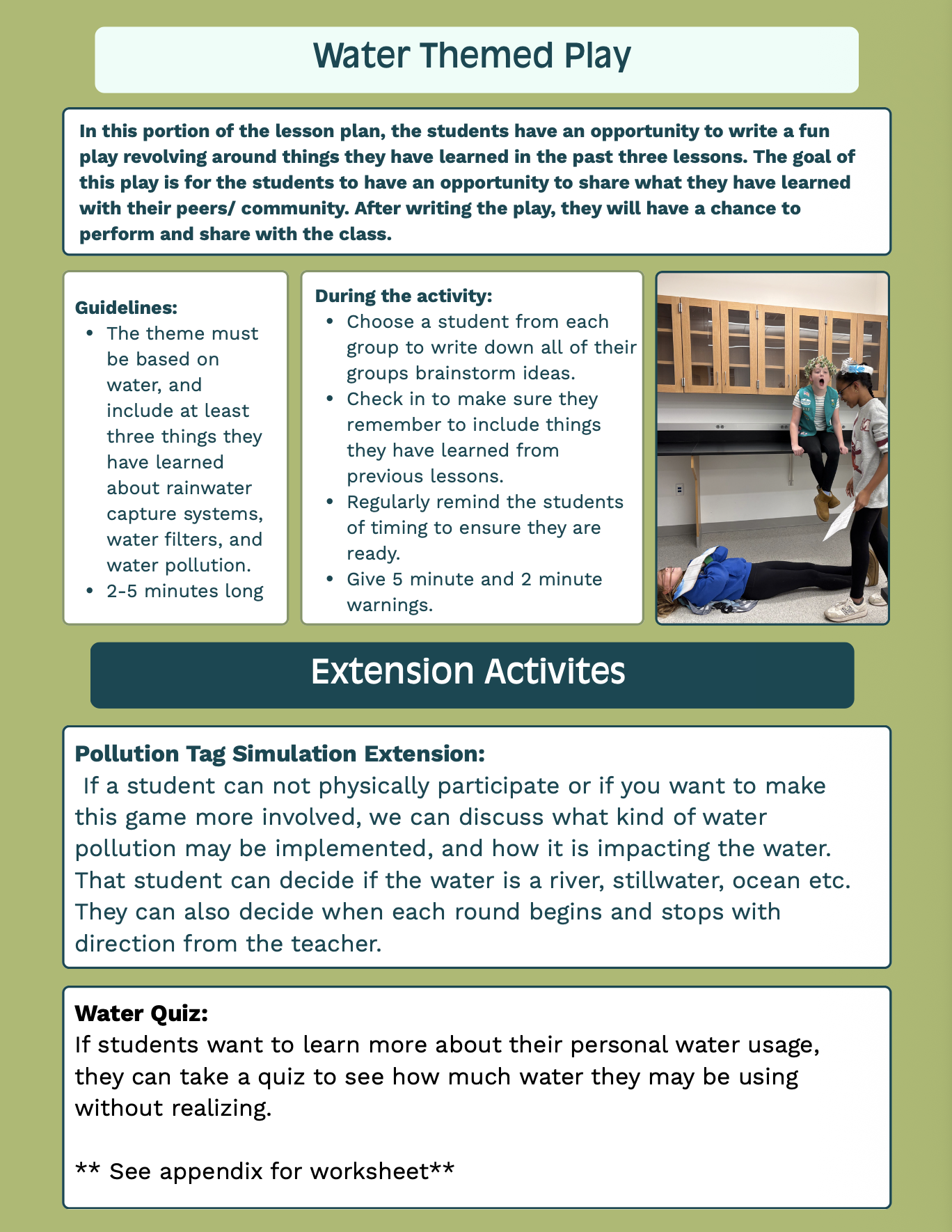
Across three sessions, the scouts collected data, experimented with materials, and translated their learning into creative skits focused on water conservation. Working directly with the troop reinforced the importance of youth-centered, project-based education and highlighted how experiential learning can empower young people to understand environmental issues and take meaningful action.
Photos